Optimizing Rider Onboarding – Shadowfax
Being the sole designer, I owned the end-to-end experience.
→ Mapped drop-offs through funnel analysis.
→ Benchmarked competitors like Swiggy and Zomato.
→ Designed flows, UI screens, and error-prevention mechanisms.
→ Collaborated closely with PMs and developers.
Onboarding isn’t about compliance alone, it’s about trust, speed, and keeping riders moving forward.
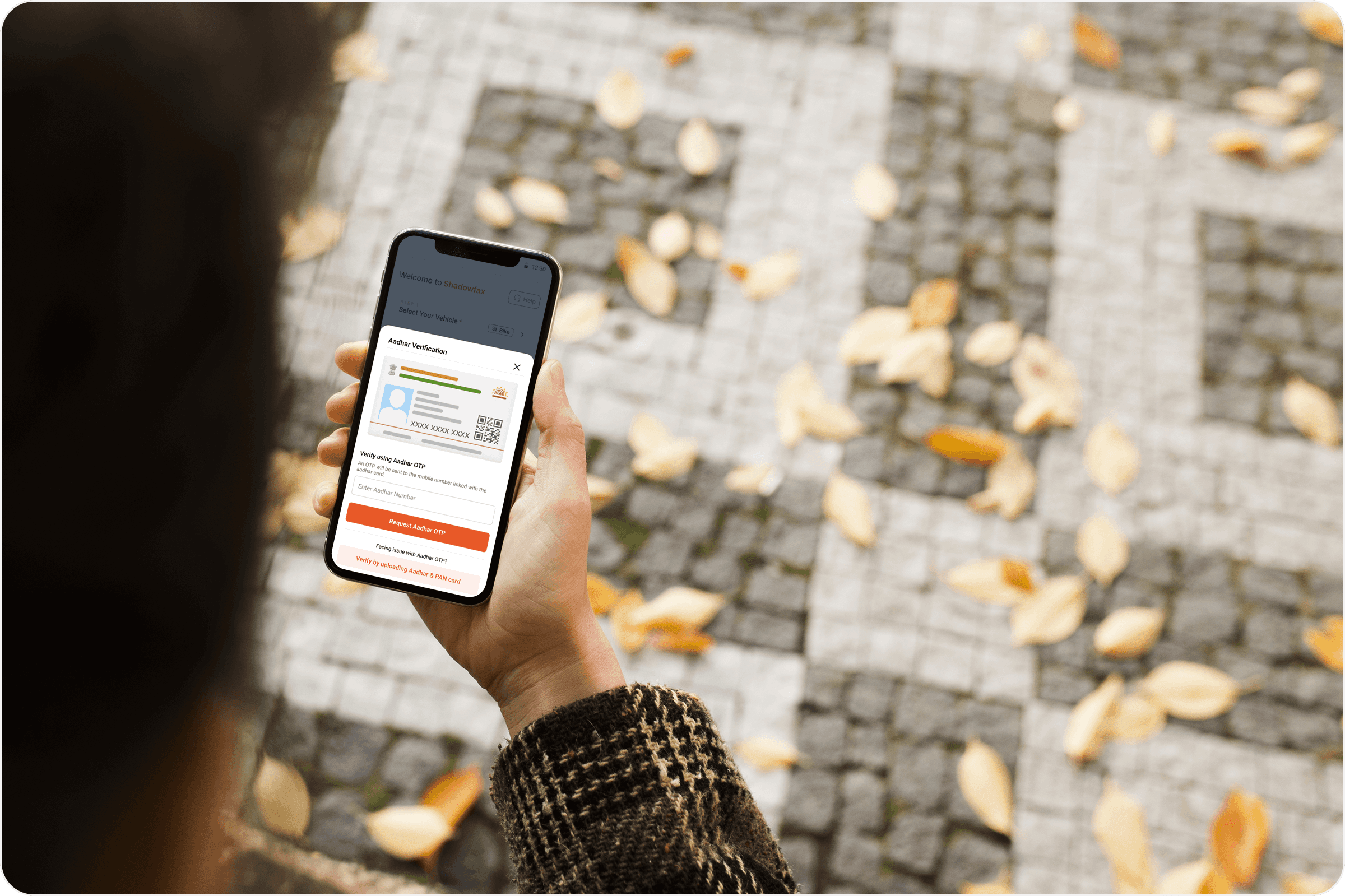
Problem Faced:
At Shadowfax, we onboard thousands of riders every week. The onboarding flow was critical for activating riders, but it was broken:
→ 80% of riders abandoned onboarding every week.
→ OCR failures (11% Aadhaar, 4% PAN, frequent selfie mismatches) blocked progress.
→ Manual verification delayed activation and payouts.
The Process:
I started with a funnel deep-dive:
28% of users drop off before document upload, rising to 33% for organic leads from Facebook and Google.
With Aadhaar as the first step, an 11% OCR failure rate creates a bottleneck that blocks riders from completing the rest of onboarding.
About 5% of profiles fail cross-document verification due to mismatches between submitted documents, such as name discrepancies across PAN and Aadhaar.
Post-activation delays from missing PAN, bank mismatches, and failed selfie verifications often put rider payouts on hold.
From competitive benchmarking, I learned that industry leaders:
Always combined Aadhaar + PAN verification.
Used real-time selfie validation instead of manual checks.
Collected UPI/bank details upfront to avoid payout issues later.
I sketched out alternative flows and tested quick prototypes to validate which ideas minimized friction without compromising compliance.
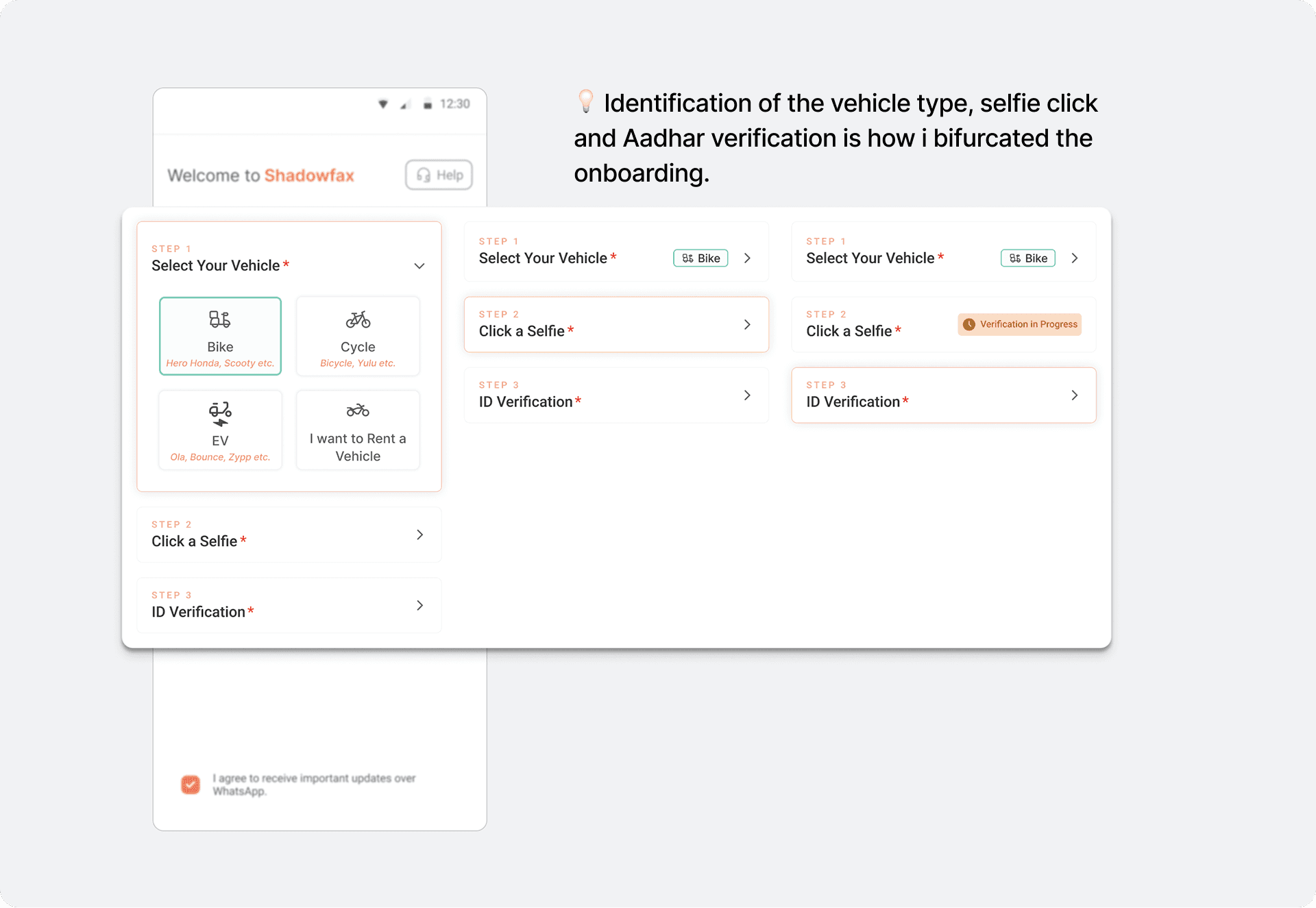
Aadhaar OTP Verification:
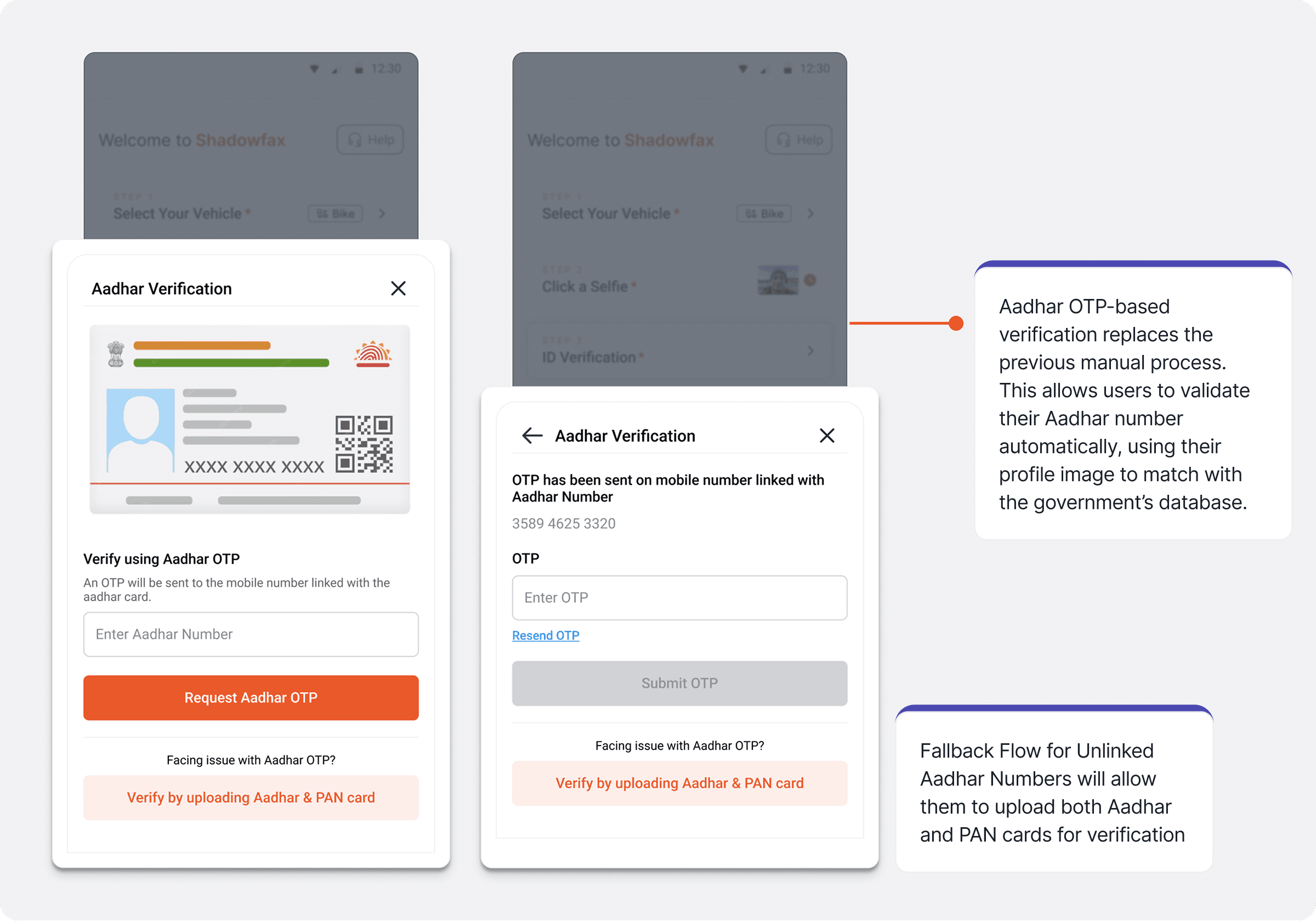
Automated checks replaced slow manual reviews with fallback plans where riders could manually input numbers or upload PAN if Aadhaar wasn’t linked to a mobile.
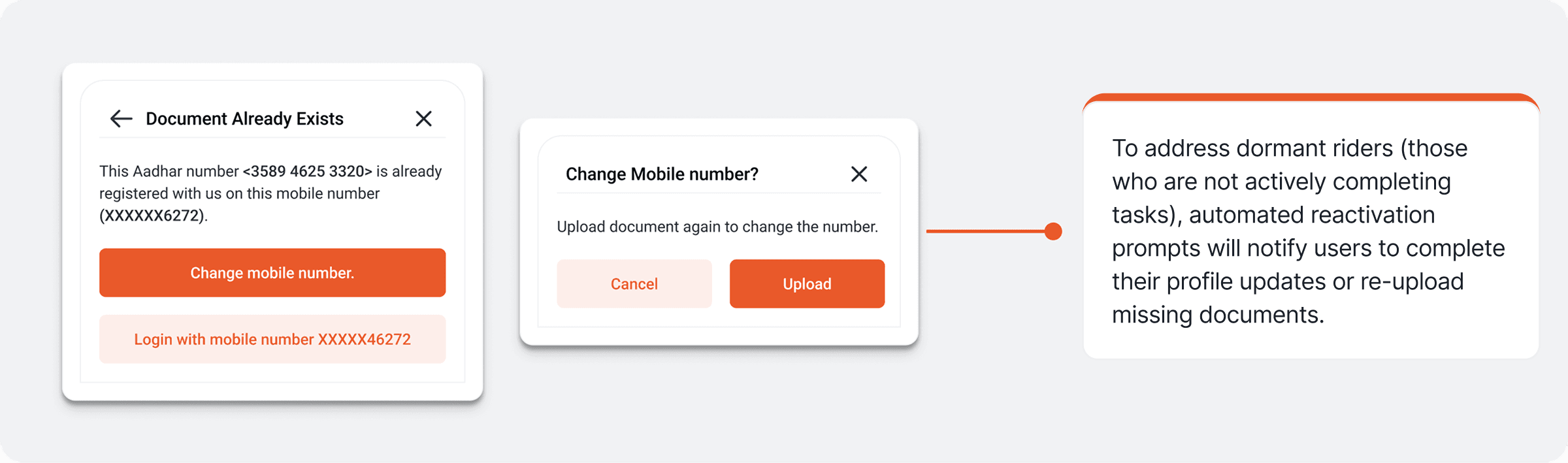
Re-activation for dormant riders
📊 The Outcome
By simplifying flows and reducing dependencies on manual checks, we:
Lowered document-upload abandonment.
Increased OCR success rates through fallbacks.
Reduced time-to-activation for riders.
Minimized payout issues post-activation.
For a funnel with 21,000+ weekly sign-ups, even small percentage improvements translated into thousands of additional active riders.
By re-designing the rider onboarding flow, I helped cut onboarding drop-offs significantly and sped up activation.
💭 Reflection
What I loved about this project was how tiny interaction-level changes (like real-time error feedback or fewer required docs) created huge business impact in a high-volume funnel.
It also reinforced a core insight for me: onboarding flows need flexibility built-in. Giving users alternate ways to verify identity prevents friction, keeps trust intact, and ensures activation doesn’t stall.