Revamping Shipment Pickup Order Assignment
Being the sole designer, I owned the end-to-end experience.
→ Conducted on-field research with HIs at hubs.
→ Partnered with 2 PMs to translate findings into product requirements.
→ Designed the revamped reverse assignment portal in Figma, balancing speed, visibility, and usability.
This case study may feel a little long of a read, please bear with me!
The old portal may take more steps, but at least I can see the full address clearly and find orders instantly with CTRL+F.
- Hub Incharge at Kundanhalli
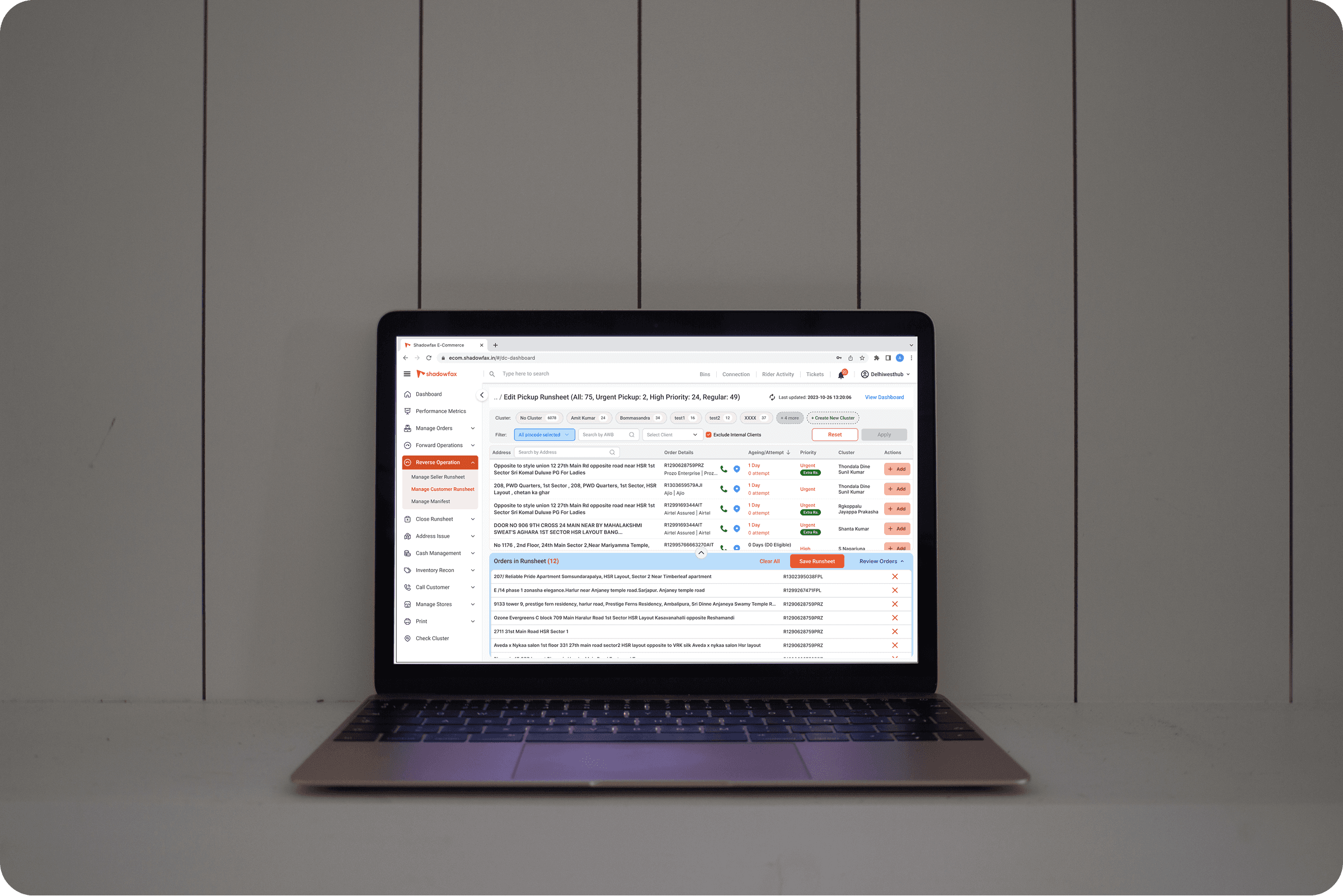
Problem Faced:
At Shadowfax hubs, Hub In-charges (HIs) create reverse pickup runsheets by assigning orders to riders. We had two competing flows:
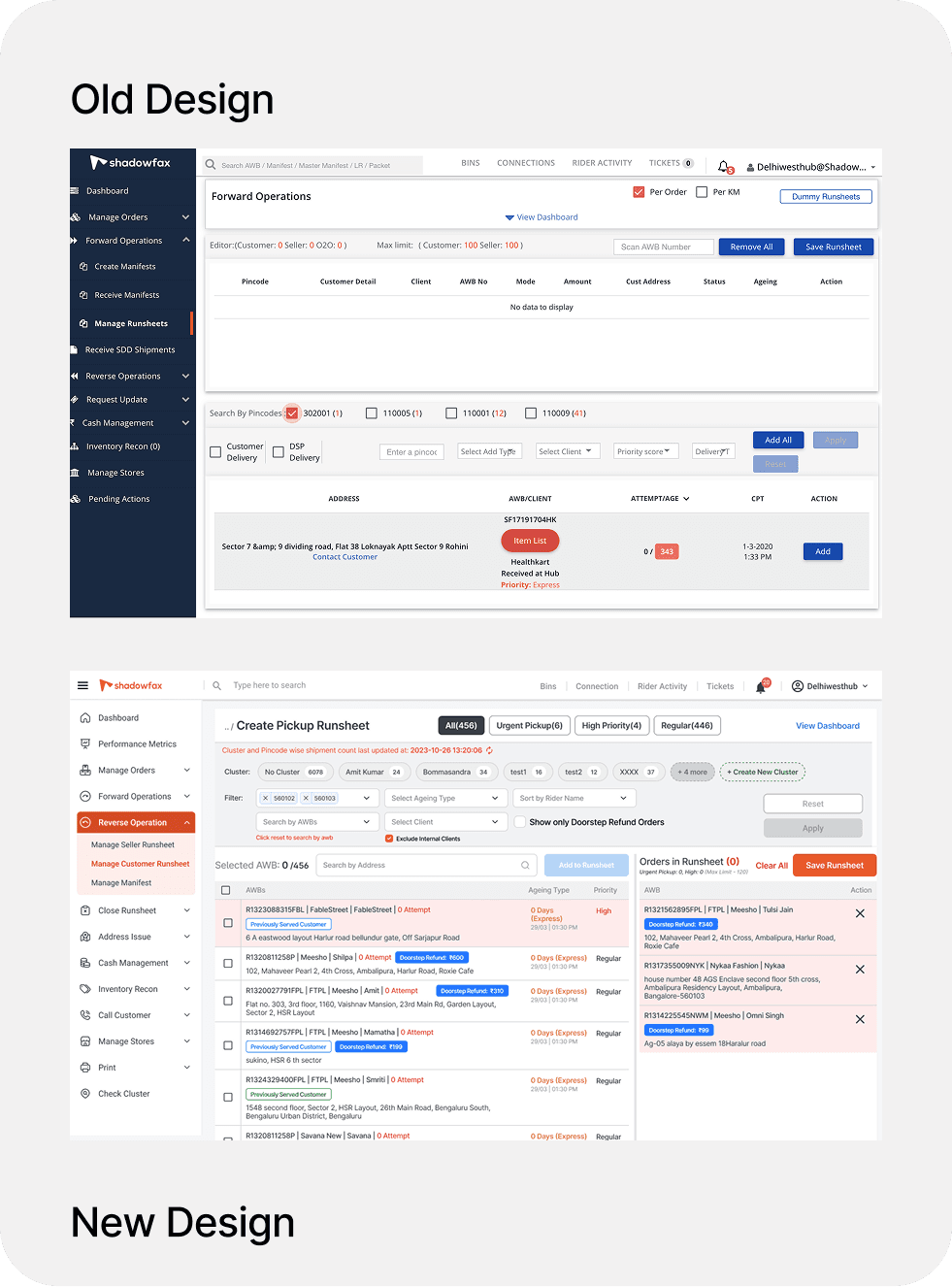
Old UI → More steps but favored for its clarity and searchability.
New UI → Reduced steps and bulk addition, but adoption was lagging.
Despite our efforts to push the new flow, 15% of hubs still preferred the old system. This was a red flag that the new design, while efficient on paper, was misaligned with real-world user needs.
🔍 The Research Findings
From shadowing HIs and comparing flows, I uncovered why the old UI still won out:
Cluttered Filters:
Too much information distracted from the essentials.
Habit/Trsut:
Some HIs simply trusted the old flow more.
The redesigned experience applies principles of UX psychology by reinforcing recognition over recall, improving cognitive fluency, and building user trust. The design progresses through a hierarchy — from visibility and ease to confidence — ensuring dispatchers feel informed, efficient, and in control.
Use a single-page infinite scroll instead of pagination.
This also improved global search + CTRL+F-like results for faster scanning. We still gave keyword search for those minority users comfortable with that approach.
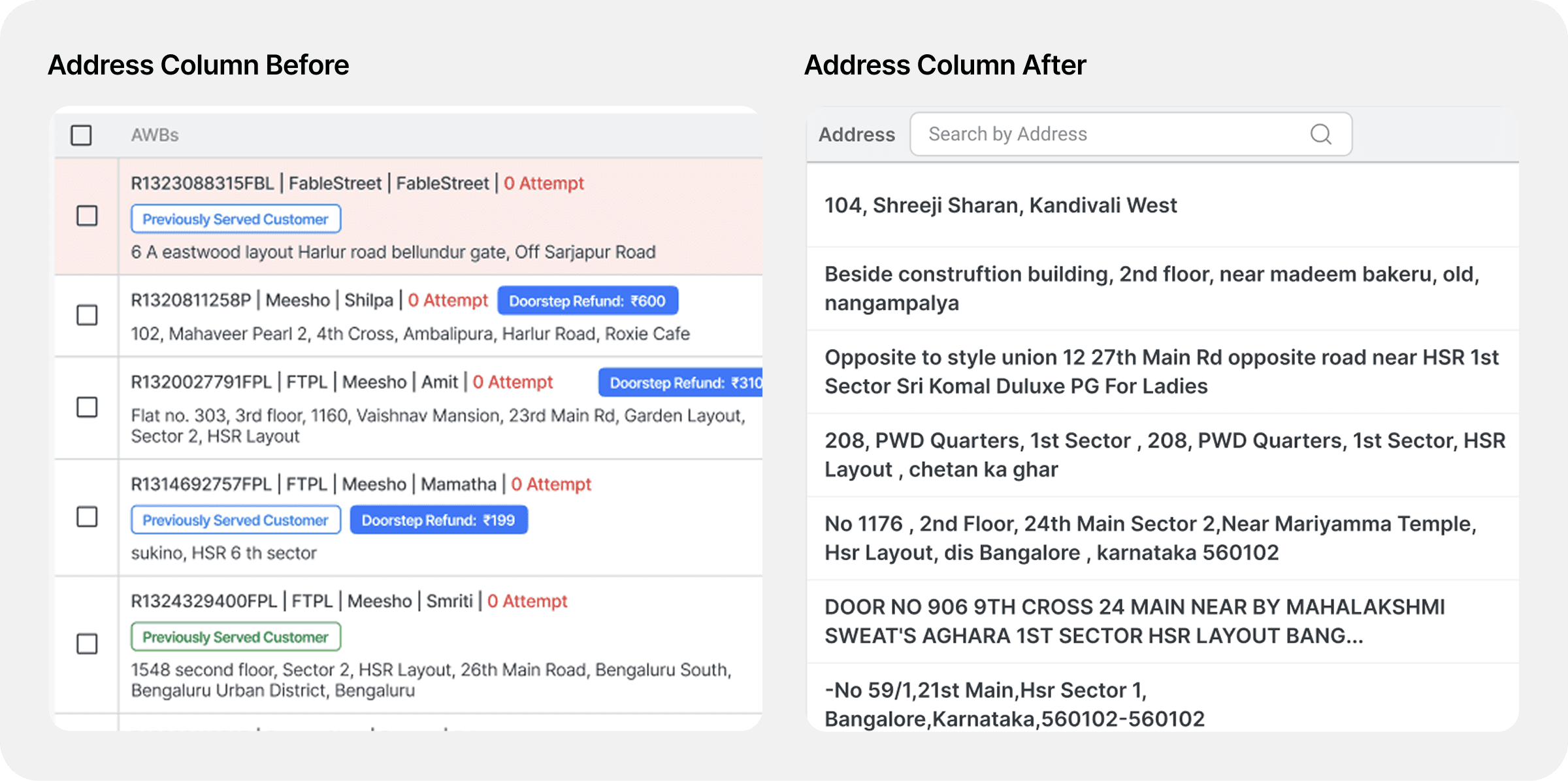
Improve address block visibility with responsive scaling and font rendering.
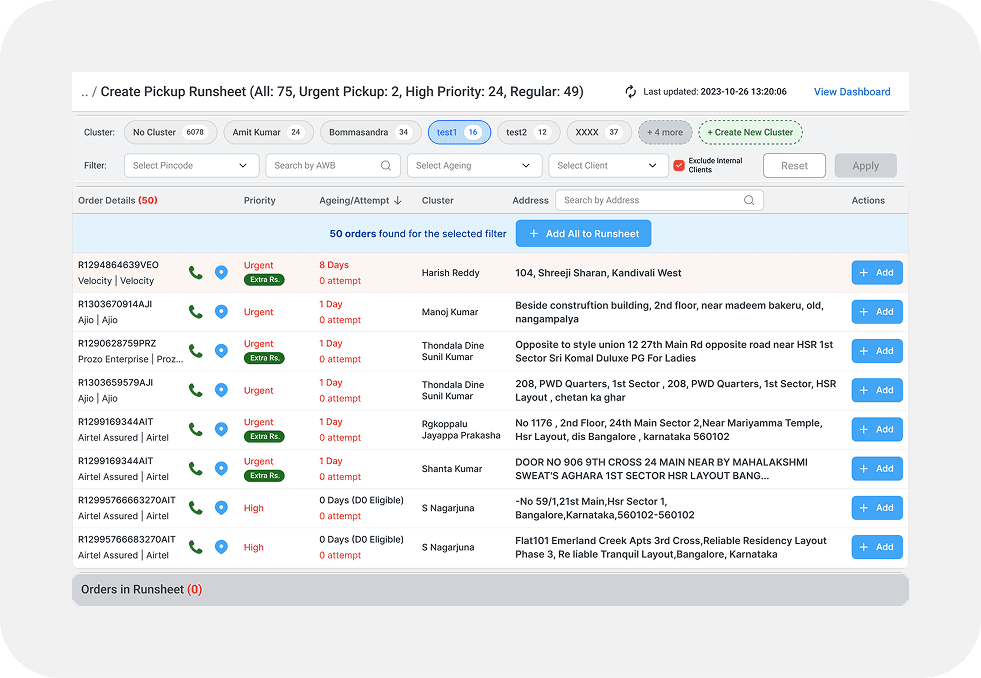
I changed the layout from two columns to one vertical stack. This gave me room to put the address on its own line, making it much clearer and simpler to read
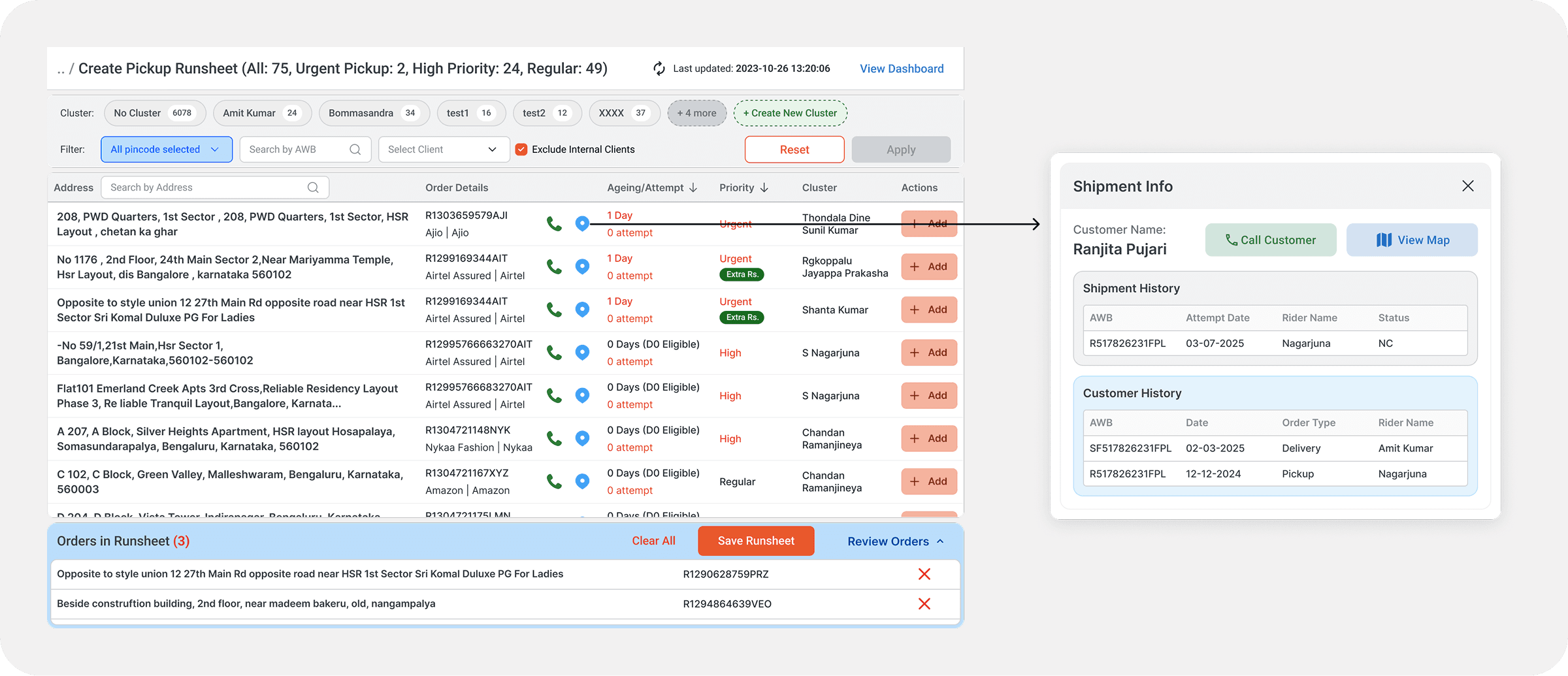
Introduce shipment and customer history pop-ups for better decision-making.
Ease of tracking for the HI to understand the customer profile and which rider suites the route more, increasing order completion rate.
Add all feature retained for bulk addition to runsheet
Post feedback, on week 4 we also implement the “All Bulk Orders to Runsheet” feature which further improved efficiency and significantly decreased runsheet creation time.
📊 The Outcome
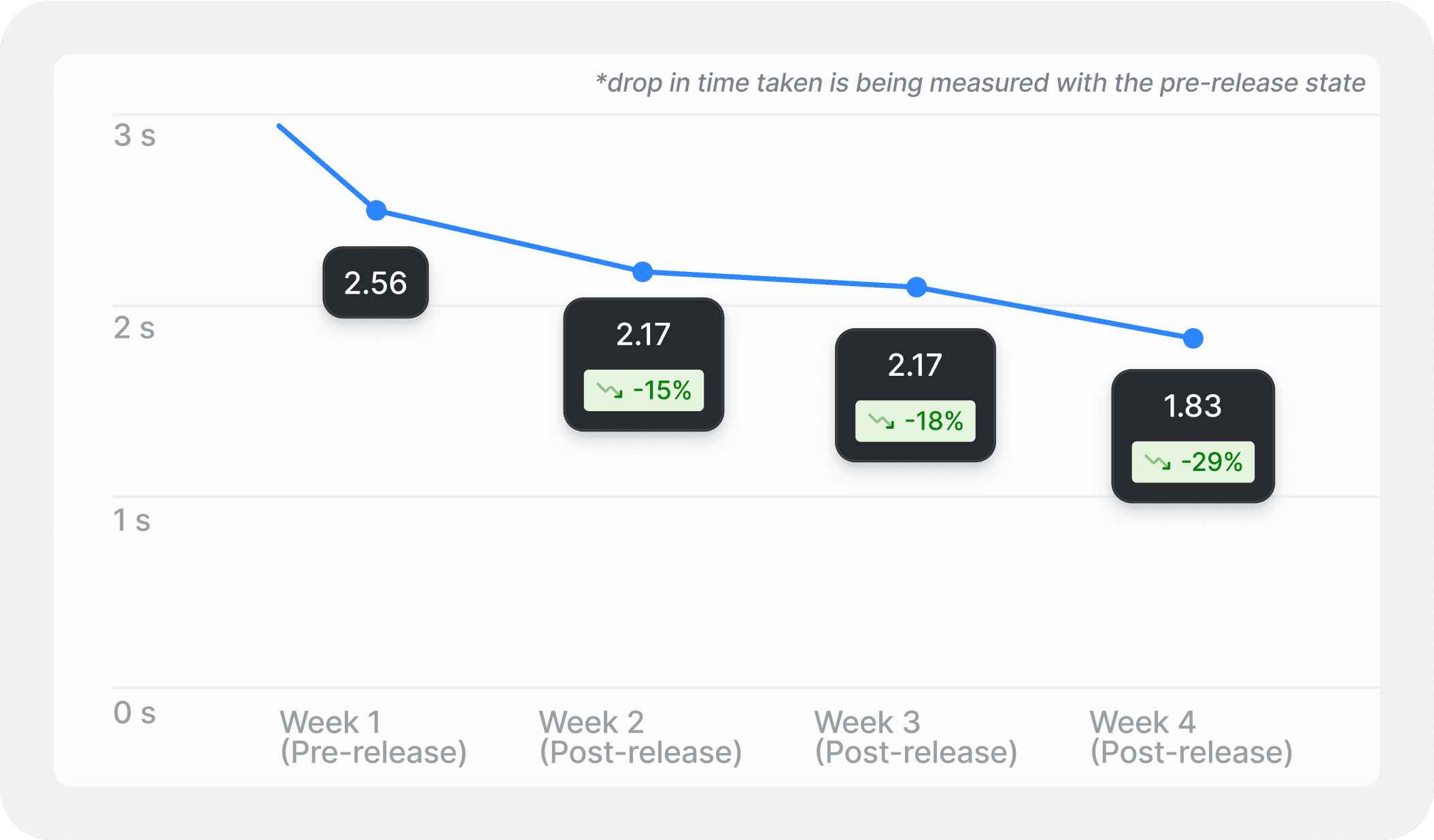
The portal went live to be tested with 39 hubs in Bangalore, the results were as follows:
29%
faster runsheet creation
(2.56 → 1.83 min by Week 4)
18%
faster per-order creation
(10.9 → 8.9 sec by Week 4)
87%
hubs improved
(34 of 39 hubs saw measurable gains)
💭 Reflection
This project taught me that reducing steps isn’t enough; UX needs to align with user habits and mental models. By blending the familiar strengths of the old flow with the functional power of the new one, we achieved both higher adoption and measurable time savings at scale.